

Commercial Asphalt Sealcoating Checklist for Busy Property Managers in Stillwater, MN
If you manage a retail center, office park, or multi-tenant site in Stillwater, keeping asphalt healthy is part of keeping people safe and happy. This checklist simplifies planning for commercial asphalt sealcoating so you can protect your investment, reduce complaints, and limit closures to the shortest possible window.
Why Sealcoating Matters In Washington County Weather
Our freeze and thaw cycles, road salt, and spring rains are tough on parking lots. Unsealed surfaces dry out, ravel, and crack faster, which lets water reach the base. That means more potholes, trip hazards, and emergency calls. A quality sealer slows oxidation, blocks moisture, and makes sweeping and plowing smoother the next winter.
Think about the traffic at your property. Main drive lanes near the Stillwater Lift Bridge traffic, delivery routes by loading docks, and stalls closest to entry doors see the most wear. Prioritize these areas for closer inspection and plan your zone schedule around peak use.
Plan Ahead To Minimize Downtime
Start by mapping your calendar. Consider tenant hours, deliveries, and events. In tourist season near Main Street and Lowell Park, weekends can be packed, so a weekday morning window might work better. The right plan keeps cars moving and keeps your phone quiet.
- choose cooler, dry weather windows that allow full cure times
- stage work in zones so tenants always have places to park
- coordinate deliveries, trash pickup, and mail so trucks avoid fresh sealer
- send notices 7 to 10 days ahead, then send a reminder the day before
- set ride-share and delivery drop points outside active zones
Stage work in zones and create a simple color-coded map for tenants and vendors. Even a basic PDF with arrows helps people understand where to park and how to enter. The clearer the plan, the smoother the day.
Site Readiness: Sealcoating Prep Steps That Prevent Delays
Good prep makes or breaks a sealcoat day. Walk the site one week prior and again the afternoon before the crew arrives. Fix what you can and document what needs attention so nothing surprises you at 6 a.m.
- confirm sweeping and edge blowing so the surface is clean
- treat oil spots and heavy drips so the sealer bonds
- tape off utility covers and drains to keep them clean
- mark irrigation heads and low spots to avoid damage
- verify water access if rinsing is needed and secure dumpster lids
Set barricade drop locations the day before. Place cones, sawhorses, and caution tape at every entry so your crew can close zones fast. Post clear tenant notices at lobby doors and elevators with dates, zones, and an onsite contact number.
Traffic Control And Safety For Tenants And Guests
Safety is the first impression on sealcoat day. Create a detour loop with arrows and large letters, not small signs that drivers miss. Keep fire lanes open at all times and place accessible parking in the nearest open zone with a safe, signed path to the door.
Assign one point of contact to update property staff each hour. If your site borders a busy road like Highway 36 or a school pick-up route, place extra cones and flag an alternate entry. Protect new sealer from turning wheels by setting wide turns with cones at corners and drive lanes.
Line Striping And Signage After The Sealer Cures
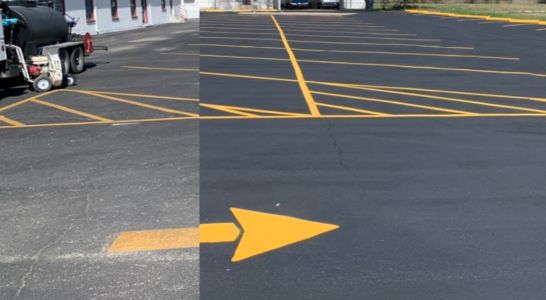
Fresh sealer needs time to set before striping. Your crew will verify tack-free status and then lay out stalls, ADA spaces, arrows, and stop bars. Ask for crisp, high-contrast lines and reflective beads where night visibility matters, like near restaurant parking and loading areas.
Do a quick walk-through with the foreman. Confirm stall counts, crosshatch locations, and any reserved spaces. Photograph the lot for your records and for tenant updates.
Quality Standards Property Managers Can Trust
Expect uniform coverage with no puddling, stripes, or missed edges. Sealer should be mixed to manufacturer specs and applied in even passes. Squeegee and spray methods both work when used correctly, and edges near curbs should be neat without overspray on sidewalks.
Crack routing and fill should sit slightly crowned and then blend under the finished sealer. If your site includes private drives or service lanes that see constant turning traffic, consider a sanded top coat for extra texture and durability.
When To Repair Before You Seal
Sealcoating is a surface treatment, not a structural fix. If you have broken edges, alligator cracking, or soft subbase, repair first so the sealer lasts. Schedule patching and pothole work a few days ahead of your sealcoat window so compaction and tack cures properly.
For broken areas or open holes, coordinate pothole repair before the sealer goes down. Tight seams and well-compacted patches help the final surface look uniform and perform better through winter plowing.
Parking Lot Maintenance Plan After Sealcoating
A simple routine keeps your lot looking new. Build a quarterly sweep schedule and a semiannual inspection for drains, edges, and high-traffic corners. Add quick response tasks for oil drips and debris to stop small problems from becoming big ones.
Include the following in your parking lot maintenance plan:
- quarterly sweeping and seasonal blowouts along curbs and islands
- prompt oil spot treatment and small crack sealing before winter
- paint touch-ups where turning traffic scuffs arrows and stop bars
- post-storm walk-throughs to check drains and sediment build-up
Document your plan so tenants know what to expect. Share before-and-after photos and note the sealcoat date in your capital plan. That record helps you time the next service window and budget with confidence.
Local Details That Can Affect Your Schedule
Shaded lots near the bluffs or tall trees hold moisture longer, which can slow dry times. Wind along the St. Croix can carry dust onto the surface, so watch the forecast and adjust sweeping schedules if needed. Lots that serve restaurants or clinics may need early morning or split-shift work to maintain access.
Industrial sites in the Stillwater area often run daytime shipping. Coordinate with carriers for temporary afternoon pickups or use a remote staging area. Retail centers near Oak Park Heights may prefer overnight work when stores close earlier on weekdays.
Communications That Calm Tenants And Reduce Complaints
Clear, simple messages save you time. Send a one-page notice that explains dates, zones, where to park, and towing policies. Include a map, a short FAQ about walking on fresh sealer, and the expected reopening times for each zone.
Give every tenant a direct contact number for the day of service. If your property uses a resident or merchant portal, post the same notice there and schedule automated reminders. Update the signboard at each entry so guests know where to go.
How To Keep Emergency Access And Deliveries Moving
Keep one main drive lane open for emergency vehicles at all times. For package carriers and food delivery drivers, set a temporary drop area and sign it well. If your property sits on a slope, place extra cones downhill from the work zone to prevent cut-through traffic.
For large trucks, add wide turning radiuses at corners and protect them with cones. If a delivery must cross a closed zone, coordinate a window with the crew lead after the surface has skinned over to avoid tracking.
Edges, Drains, And Other Trouble Spots In Stillwater, MN
Cold joints near curb lines and around catch basins tend to crack first. Watch the joints by snow pile areas where salt collects. Low spots near loading docks can hold water and fine sediment, which weakens sealer over time.
Schedule a quick spring inspection after thaw. Clean drains, sweep sediment, and look for early cracking where plows scrape most. Address those issues before they spread.
Drive Lanes, Private Drives, And Walkable Entries
Front entries and drive lanes see the most turning pressure. Tight turns and steep aprons can scuff fresh sealer if opened too early. If your campus includes private residential drives, consider coordinating driveway sealcoating during the same mobilization to minimize future disruptions.
Good pedestrian flow matters too. Use tall cones and clear arrows to guide people to open sidewalks. Keep accessible routes smooth, dry, and well marked during each phase.
What To Expect On Sealcoat Day
The crew will cone off the active zone, clean edges, and detail-blow the surface. After mixing, they will apply the first coat, let it cure, then apply a second coat where specified. Striping follows when the surface is tack-free, and the zone reopens once it can handle rolling traffic without scuffing.
Weather rules the clock. Seal in a clean, dry forecast and build a buffer into your schedule. Your tenants will appreciate an honest window more than an optimistic guess that leads to delays.
Quick Checklist You Can Share With Tenants
Use this ready-to-send list so everyone stays on the same page:
- dates, zones, and alternate parking clearly marked on a simple map
- deliveries and trash pickup rescheduled outside work windows
- access routes and detours posted at every entry and lobby
- no driving or parking in coned areas until signs say open
- follow new striping and arrows when zones reopen
Link Your Plan To Your Capital Schedule
Sealcoating typically follows repair and crack sealing in a smart cycle. Track your last service date, keep photos, and note problem areas so you can budget the next phase well in advance. A documented plan reduces rush work and avoids peak-season bottlenecks.
For a deeper look at process options and timing, review details on commercial asphalt sealcoating and compare them to your site needs, tenant mix, and traffic patterns.
Your Next Step In Stillwater, MN
If you want a clean, predictable experience, partner with a team that respects your time and your tenants. Learn more about commercial asphalt sealcoating in Stillwater, MN and see how Twin City Sealers plans zone closures, signage, and communication before any work begins.
Ready to build a plan that fits your calendar and minimizes downtime? Call 612-757-0399 to schedule a site walk. We will review traffic patterns, note repairs, and give you a written schedule with clear steps to keep your lot looking sharp through every season.
Keep people safe, protect your asphalt, and cut surprises with a simple checklist and a reliable partner. When you are set to move forward, explore the scope and timing options on our service page for commercial work and lock in a date that fits your busiest tenants.
Keep Your Driveway & Parking Lot Looking New with Our Sealcoating Services In St. Paul